
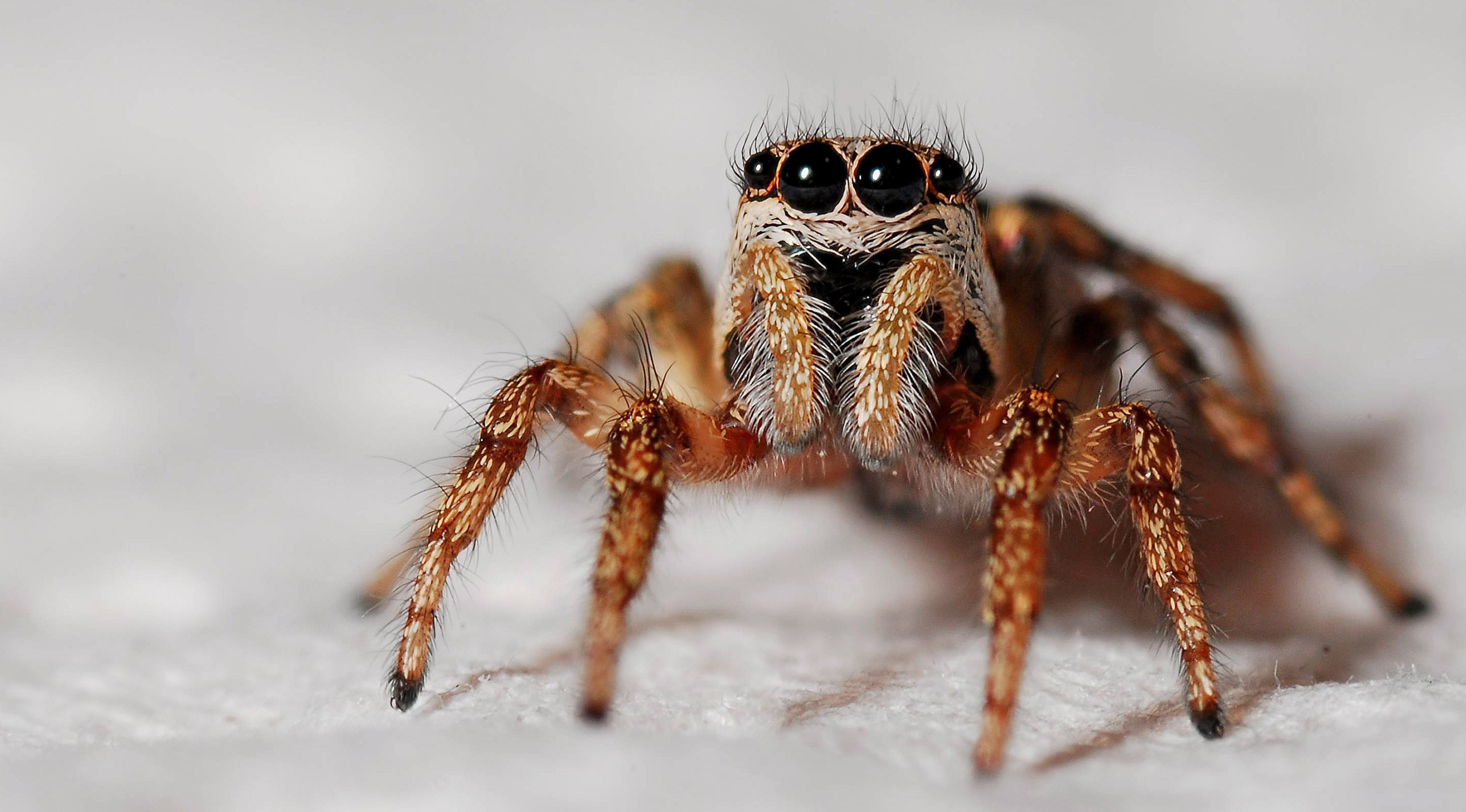
Spiders are a common encounter among many people worldwide as well as a very common fear. However, if you move beyond their eight legs, multiple eyes and sticky webs, spiders are a wonderfully fascinating species and very beneficial to our natural world.
One of the biggest benefits is their ability to act as a natural form of pest control, which in turn helps slow down the spread of diseases that insects can spread such as E.coli from flies, malaria from mosquitoes, and Salmonella from roaches which are also known to be carriers of over 30 different types of bacteria, parasitic worms, and viruses. Spiders spin their webs in intricate ways to trap most insects that have the potential to be infectious. In fact, the different web patterns that various spider species spin are extremely important because it’s made to aid in trapping specific insects.?
Orb webs are the typical circular web that resemble a bicycle wheel and is designed to absorb the shock of flying insects. Funnel webs, which resemble long tubes, are built so the spider can stay out of sight while an unsuspecting insect crawls inside, giving the spider enough time to pounce. Cobwebs are the typical Halloween decor, which resemble messy 3D webs that are designed to knock flying insects to the ground. Thick, zigzag patterns known as stabilimenta, aid in reflecting the light of the sun to warn birds not to ruin the spider’s hard work.?
????While most spiders are harmless to humans, there are a few exceptions that can be dangerous. In the United States, the female black widow spider with the red hourglass on its abdomen and the brown recluse spider, which has a dark violin-shaped marking on its head pointing towards the abdomen, have an incredibly nasty bite that would require immediate medical intervention.?
???Although pest control might be helpful if you have an infestation of a dangerous species of spider in your home, most spiders can be removed humanely or left to perform their important ecological job.
Resource –>?https://pmc.ncbi.nlm.nih.gov/articles/PMC12586304/