Pheromones

It’s likely you’ve heard the term pheromones used in discussions about both animals and humans. But what exactly are they? Pheromones are chemical signals released by animals to communicate with members of the same species. While they are most commonly associated with reproduction, they also serve many other functions, such as warning of predators, marking territory, and attracting others to a specific location. 

Pheromones were first discovered in moths when scientists investigated how male moths could locate females in complete darkness. Researchers found that female moths release a unique chemical blend that attracts males. Further study revealed that each moth species produces its own distinct pheromone signature, allowing communication only within that species. In some animals, pheromones also help ensure reproductive fitness. For example, male rats produce certain pheromones only when they have adequate testosterone levels. Lower testosterone can be associated with reduced fertility, smaller reproductive organs, and lower energy, making those males less attractive to potential mates. 

Our pets are also expert communicators through pheromones. When dogs or cats urinate around the home, they may be marking territory, signaling to other animals that the area is already claimed. Cats use pheromones in more endearing ways as well. When a cat rubs its head against you, it’s not only showing affection—it’s also marking you as part of its social group. 

But do humans (Homo sapiens) have pheromones? Many perfume companies market products containing “human pheromones” that supposedly increase attraction, but scientific evidence does not support these claims. While our distant ancestors likely used pheromone-based communication, no human pheromone has been conclusively identified. As humans evolved, advanced cognition, language, and social behaviors likely reduced any reliance on chemical communication. 

A useful comparison can be made with skunks, whose scent glands are highly specialized for chemical signaling. Human scent-related glands, by contrast, are far less developed because we communicate information directly through language and social interaction. The odors humans produce are generally influenced by factors such as diet, sweat, hormones, and genetics rather than pheromonal communication. 

Scientists use several criteria when determining whether a chemical signal qualifies as a pheromone, including species specificity, a clearly identified chemical structure, and a demonstrated role in natural behavior. While these criteria are well established in many animal species, humans have yet to meet them. As a result, the current scientific consensus is that humans do not possess confirmed pheromones, relying instead on complex social and verbal forms of communication. 

Resources –>?Pheromone – an overview | ScienceDirect Topics 

Dog Pheromones: Their Role & Importance | Lancaster Puppies 

The long quest to identify human pheromones and the smell of attraction, aggression and fear – Scienceline 

Pure Instinct Lawsuit Alleges Pheromone Product Efficacy Claims Are ‘Scientifically False’?? 

Burrowing Owls

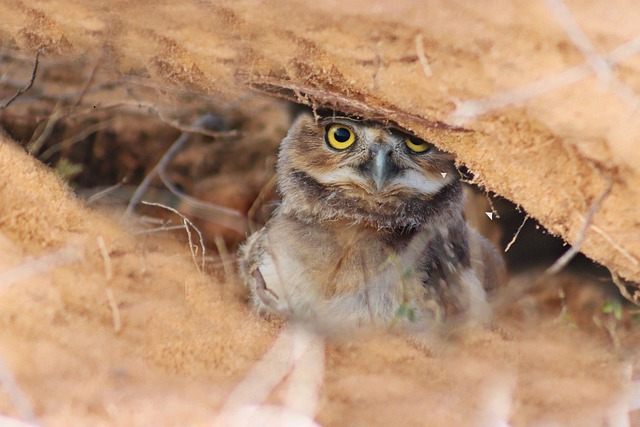
Owls are fascinating little creatures that have adapted to be skilled hunters that get a lot of human attention. From their fuzzy appearance to big doe eyes, and puppy-like demeaner, it’s hard to have disdain for them! In South Florida we have a native species of owl called the Athene Cunicularia otherwise known as the Burrowing Owl! That species of owl is incredibly unique because it is both one of the smallest and the only one that nests underground. They spend a good portion of their time on the surface watching out for predators, and potential prey they might encounter. 

Living in burrows can have its ups and downs. Burrowing Owls find it to be an ideal place to keep their eggs and young at stable temperatures as they grow. They can start laying their eggs as early as February since we have warmer temperatures! However, during the rainy season, their burrows are at risk of flooding which could lead to the loss of their vulnerable young. It takes approximately 40 days from when they are incubated to when they become adults. The Florida rainy season starts in the summer months, sometimes as early as April. Sometimes these little creatures have close encounters with poor weather and have to abandon their nest for their own safety. 

Burrowing owls are one of the few animals’ species that are entirely monogamous, which means they stay loyal to one partner. So, when it’s time for them to have a family, the male would be the one to stand guard and hunt for food while the female stays inside the burrow and incubates their clutch of eggs. It takes approximately 3 weeks for the eggs to finish the incubation period, and then another week of them growing up to as baby chicks entirely dependent on their parents for survival. They have a unique fledgling phase, which is when they are starting to get more comfortable walking around, and they’d stay by the entrance of their burrow to stretch their wings and observe their surroundings. It’s also where they begin practicing their hunting skills which include pouncing on prey! 

They have unique behaviors when it comes down to their burrows which can be differentiated by whether they are northern or southern Burrowing Owls. Northern Burrowing Owls are migratory and evict animals such as prairie dogs from their burrows to reside in them. They also tend to have more feathered legs which are better suited for colder climates! Meanwhile, southern Burrowing Owls are non-migratory, and so they tend to make their own burrows and reside in them longer-term. Some Burrowing Owls have also been known to cover their burrows in cow manure to both mask their scent from predators and attract dung beetles to their residence. They can also imitate rattle snake sounds to deter predators that get too close!

Burrowing Owls are an excellent natural pest control, primarily feeding bugs and small rodents. They are vital to our ecosystems and truly an intriguing organism! 

Resources –> The Very Strange and Unusual Burrowing Owl

47 Fascinating Owl Facts [2025] | FactRetriever.com

Fascinating Facts About Owls | Almanac.com