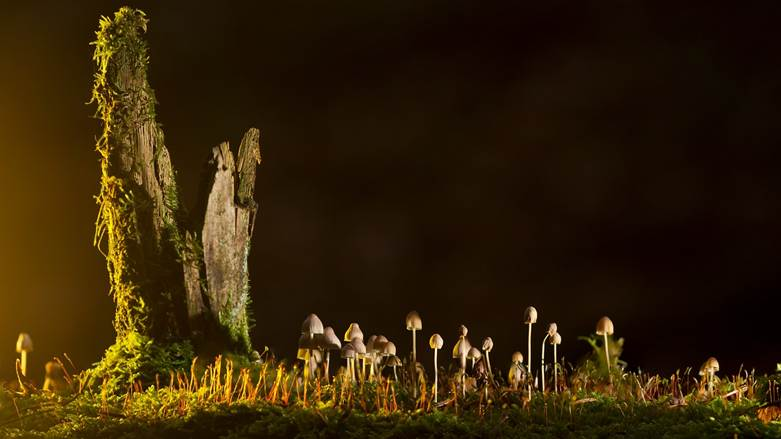
Mushrooms are everywhere! The vast number of species cover a wide range of various jobs either beneficial or harmful to humans or nonhumans alike. Fungi can be responsible for diseases that can affect our internal organs such as valley fever affecting humans which is a lung infection caused by the inhalation of Coccidioides spores, to a fungus known as cordyceps which hijacks an ants nervous system causing them to climb to an appropriate height for the fungus to thus grow its fruiting body and spread its spores to other ants.
So, what benefit does Fungi have towards humans and the ecosystem around us? We can start with plants! Plants play a crucial role in many of our ecosystems because they constitute the bottom of most food chains. Some fungi can attach to the roots of certain plants and thus increase the nutrient and water absorption of the plant while gaining additional nutrients itself. This is referred to as a mutual symbiosis relationship where both parties benefit from. A specific example of this could include various trees such as pines, oaks, and redwoods with soil fungus such as Amanita or Boletus. Fungi alongside plants are part of a process called soil carbon sequestration where excess carbon that is in the atmosphere is captured and stored into the soil. That not only keeps our atmosphere in a cleaner state but also provides fertile soil for new plants.
The human consumption of Fungi is also revealing to researchers its potential for medicinal breakthroughs as more clinical trials is done to depict its effectiveness. Tumors, AIDS, and diabetes are some of the largest health issues human struggle with that are showing promising results using Fungi. It is still currently considered an alternative medicine, but it is extremely promising!
What can we do as a species to protect our fungal communities? Avoiding harsh chemicals and pesticides in gardens could help in not disturbing the balance the microbial communities are attempting to form. Avoid heavy tilling and compacting your garden as to not damage the fungal hyphae or fine fungal threads that form in the soil. Using organic mulch like compost can aid in feeding the soil to create the ideal environments for the fungi to thrive as well! If gardening isn’t your forte, you could always contribute to the global mapping of fungal biodiversity by logging your fungi observations using apps like iNaturalist or a website like mushroom observer! Using those platforms helps researchers gather data that is used to further understand and protect local ecosystems. Mushrooms are fascinating organisms that help keep our ecosystems thriving! Truly fascinating organisms!
Resources https://www.decadeonrestoration.org/stories/benefits-fungi-environment-and-humans
https://pmc.ncbi.nlm.nih.gov/articles/PMC10296638
Video on ants affected by cordyceps https://www.youtube.com/watch?v=XuKjBIBBAL8