Celebrating Earth Day with EarthFest!

It’s that time of year again where all your nature-loving, tree-hugging friends and family get loud about their care for Mother Earth. Earth Day shows up every year on April 22nd, but here in South Florida, it doesn’t always look like the pictures you might expect. There’s no thawing snow or first signs of spring. Instead, we’re slowly easing into the upcoming wet season of summer. The air is a little warmer, the skies a little brighter, and if you look closely, nature is already in motion. Pollinators are busy at work, plants are pushing out new growth, and wildlife is adjusting to longer, hotter days ahead. At the Sawgrass Nature Center, however, Earth Day isn’t a reset button, it’s part of an ongoing rhythm.

Caring for the Earth isn’t something that happens once a year. It’s something that builds slowly, in small moments, over time. It’s an active choice you make every single day, a shift in your state of mind. It can be the choice to plant native species instead of something ornamental, noticing the butterflies in your yard, or even a child’s curiosity turning into respect, and then into stewardship. It’s a relationship, and like any relationship, it doesn’t have to start big. It can be overwhelming when trying to decide where to begin, but don’t be afraid to start small! That can look like planting something native, even if it’s just one pot on a patio, putting out a shallow dish of water for wildlife, turning off outdoor lights a little earlier to help nocturnal animals, taking a walk and simply noticing what’s growing, flying, or crawling around you, and sharing what you learn with someone else. These actions might seem simple, but here in Florida’s ecosystems, they matter more than you might think. Our native plants support pollinators, our green spaces provide refuge for wildlife, and our everyday choices shape the spaces we all share.

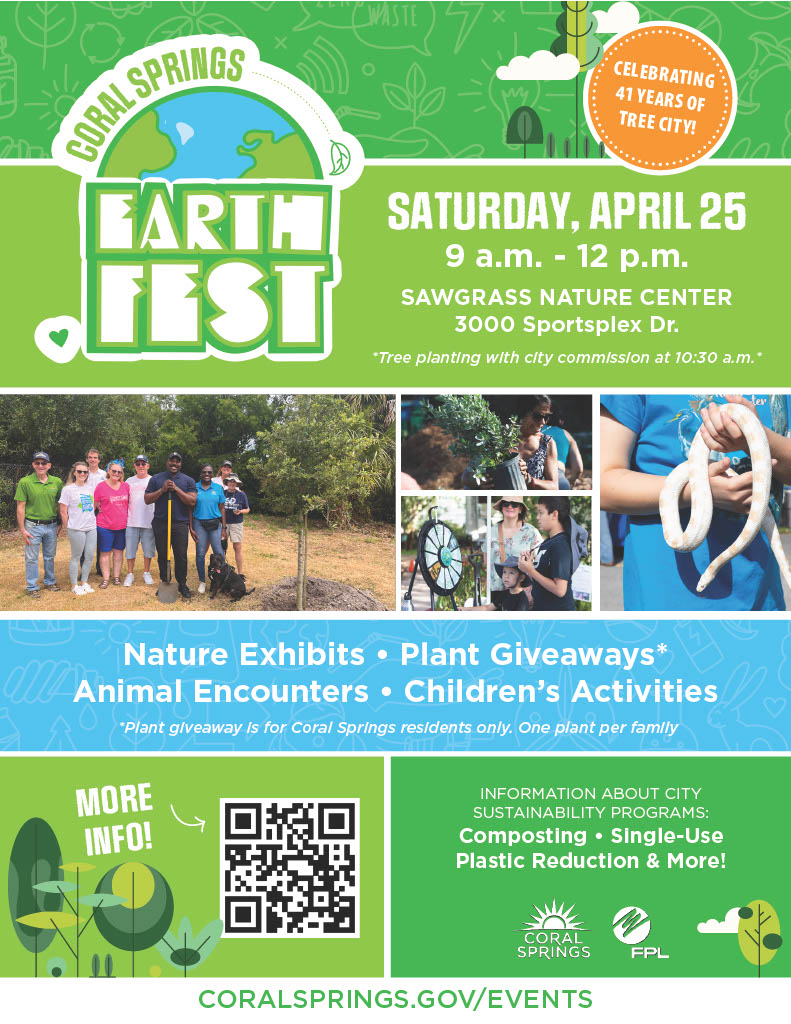
Earth Day isn’t about doing everything perfectly. It’s about choosing to stay connected. And if you’re looking for a place to start (or to keep that connection growing), we’d love to see you this Saturday at our EarthFest event here at the Sawgrass Nature Center and Wildlife Hospital! It’s a chance to get your hands a little dirty, learn something new, and spend time with people who care about this place just as much as you do. Click the link below for more information! Remember, Earth Day may only come once a year, but being part of it can happen anytime.

EarthFest in Coral Springs, FL

Camp WILD’s Collaboration with Wildlife Rehabilitation

As temperatures continue to rise here in South Florida in preparation for the summer season, our community has been met with the plentifulness of spring all around. Blooming flowers, crawling critters, fledgling birds learning to fly, baby raccoons and opossums, and so much more hidden abundance come with the arrival of spring. Here at the Sawgrass Nature Center, we welcomed this new season with a celebration of new seasons at our Spring Break Camp WILD!

Throughout camp we learned all about the parts of a flower and pollination while making our own homemade cardboard flower vases to fill with the colors of spring. We used our big scientist brains to discuss the physics behind a rainbow and even made our own spectroscopes. We’ve got some real smarty-pants campers here! We had a visit from our wildlife rehabber, Ms. Tina, and a bunny rabbit from the wildlife hospital. And most notably, our spring break campers left their permanent mark here at the nature center during this break camp. Working together, we helped paint an essential tool used in one of our animals’ habitats. Bubba, our African Spur-Thighed Tortoise, requested that our campers add their own creative flare to his brand-new backscratcher. So, we did just that!

Tortoises might have tough, protective shells, but that doesn’t mean they don’t get a little itchy now and then! For species like the African spur-thighed tortoise, their shells and skin can trap dirt, shed skin, and even tiny irritants that they can’t easily reach or rub off on their own, especially in a managed enclosure without all the natural textures they’d encounter in the wild. That’s where a good “backscratcher” comes in! Providing a safe, textured tool gives them a way to scratch, stretch, and engage in natural behaviors that support both their physical comfort and mental enrichment. So, while it may look like a simple, silly object, a backscratcher is actually a really important part of helping our tortoise stay happy, healthy, and itch-free, and now, thanks to our campers, it comes with a personal touch!

Moments like this go far beyond a simple craft. They create meaningful connections between our campers and the animals in our care. By taking part in something that directly benefits the tortoise, campers get to see how even small actions can make a big difference in an animal’s well-being. It turns creativity into compassion and curiosity into stewardship. Experiences like these help foster a deeper understanding of animal care, enrichment, and respect for wildlife, which is at the heart of the Sawgrass Nature Center mission. Next time you stop by the SNC to visit Bubba, we hope you see it’s not just a painted backscratcher, but an outlet to inspire the next generation to care for the natural world in thoughtful, hands-on ways.

Nature’s Romance: The Wild Courtship Rituals of the Natural World! 

Valentine’s Day isn’t just about roses and chocolates. Although these may work for humans, wildlife find countless other ways to impress their partners.  In the natural world, it’s about hooting, dancing, decorating, and sometimes building an entire art installation just to impress someone. In different ecosystems around the world, and even right here in Florida, animals are putting on some of the most dramatic courtship performances you’ll ever see. Below, we dive into some of nature’s boldest romantics. 

The Great Horned Owl doesn’t wait for spring. In Florida, these owls begin courtship in winter. Pairs call softly back and forth in deep, echoing duets, strengthening bonds that can last for years. If you’ve ever heard that haunting nighttime hoot, you might have been listening to a Valentine’s serenade. 

The Sandhill Crane, a familiar sight in Florida fields and wetlands, takes romance to the dance floor. They bow, leap high into the air, toss sticks, flap dramatically, and call loudly in synchronized displays. It looks joyful and a little chaotic, but it reinforces pair bonds and shows off strength and coordination. 

The American Alligator prefers something a bit louder. During mating season, males and females release a deep bellow that vibrates the water’s surface. The low-frequency rumble can be felt as much as heard and is basically a swamp opera!  

Outside Florida, there are many astounding rituals that may leave a human wondering but leave an animal blushing! Male Bowerbirds are a great example. However, they don’t just dance…they build. In Australia and New Guinea, males construct elaborate “bowers” out of sticks and decorate them with brightly colored objects like flowers, shells, berries, and even bits of colorful plastic. Some species even arrange items by size to create forced perspective, an optical illusion to impress females. 

Birds-of-paradise are legendary for a reason. Males clear a stage area, groom every feather into place, and perform intricate dances that involve snapping, bouncing, wing-flicking, shape-shifting silhouettes, and hypnotic head movements. Some even transform into what looks like a floating black oval with neon highlights. 

Although many do, not all avian courtship rituals involve dance or large displays. Male Adelie Penguins present females with carefully selected pebbles. If she accepts the stone, she may use it to help build their nest. 

As funky as these rituals seem, they serve an important purpose. Courtship displays signal health, strength, creativity, and good genetics. The more impressive the performance, the more likely an animal is to pass on its traits. And when we see these behaviors happening, from Florida wetlands to tropical forests, it’s a sign that habitats are healthy enough to support new life. So, this Valentine’s Day, as we celebrate love in our own way, remember that nature has been celebrating Valentine’s Day long before we gave it a name, and honestly, it does it with a lot more flair.  

Here are some videos to provide a visual of some of these unusual and mesmerizing rituals! 

The Science Behind Groundhogs and Their Shadows! 

Every year in early February, when Americans are shivering and ready to welcome the warmth of spring, all eyes turn to a groundhog and its shadow. Will there be six more weeks of winter, or an early spring? While Groundhog Day is rooted in tradition and folklore, the real story of groundhogs is far more interesting, and surprisingly connected to the seasonal changes happening all around us. 

Groundhogs, also known as woodchucks, are true hibernators. During the coldest months, they spend weeks at a time in underground burrows, slowing their heart rate and body temperature to conserve energy. But by late winter, things begin to change. As daylight increases, groundhogs start to stir. They may briefly emerge from their burrows, not to predict the weather, but to check conditions and prepare for the upcoming breeding season. This early activity is one of nature’s subtle signs that spring is approaching, whether the calendar (or the shadow) agrees or not. 

Although they have been simplified to a holiday mascot for most, groundhogs play an important role in the ecosystems where they live. Their burrowing helps aerate soil, mix nutrients, and create shelter used by other animals like foxes, rabbits, and amphibians. In this way, groundhogs act as quiet ecosystem engineers, shaping their environment from below the surface. 

Although groundhogs aren’t native to Florida, we do have our own burrowing wildlife filling similar roles. Gopher tortoises, for example, dig deep burrows that provide shelter for more than 350 other species. Armadillos also disturb soil as they forage, influencing nutrient cycling in their own way. Different species, same idea: healthy ecosystems rely on keystone species that shape the land itself. 

Groundhog Day may be playful, but it reminds us of something deeper: nature doesn’t wait for a date on the calendar. Across the country (and right here in Florida), wildlife is already responding to longer days and subtle environmental cues. Nesting seasons are approaching, plants are preparing to bloom, and animals are shifting into a new phase of the year. So whether or not the world’s most famous groundhog saw its shadow this year, we know the natural world is already planning ahead. 

It’s Baby Season! Florida’s Late Winter Surprises

While winter in Florida may feel quiet, a lot is happening just out of sight. Late winter and early spring mark the beginning of nesting season for many of Florida’s small mammals. This includes animals like raccoons, squirrels, opossums, and rabbits. As temperatures slowly warm and food becomes more available, these animals begin preparing for their busiest time of year.

There are several familiar Florida mammals that welcome their young surprisingly early in the calendar year. Eastern gray squirrels often have babies between January and March, nesting high in trees or tucked into tree cavities. Raccoons typically give birth from February through April, choosing hollow trees, abandoned burrows, or even attics and crawl spaces. Opossums can have young almost year-round in Florida, but activity increases in late winter as conditions improve. Cottontail rabbits begin breeding early, with babies appearing by late winter and continuing into spring. Because these animals nest quietly and keep their young hidden, many people don’t realize how active this season truly is.

While so many states hunker down for the harshest parts of winter, Florida’s mild winters give wildlife a head start. Earlier nesting allows young animals more time to grow, learn survival skills, and take advantage of spring’s increased food sources. By the time hotter summer temperatures arrive, many babies are already independent or close to it. This timing is especially important for mammals that rely on trees, brush piles, and undisturbed spaces for shelter.

As baby season begins, human-wildlife interactions often increase. And it is important that members of the community know how to respond appropriately. You may notice things like more animal movement as parents forage for food, noises from attics or trees as animals nest, and even young animals appearing alone but not necessarily abandoned. If you want to help, a few small actions can make a big difference. Avoid trimming trees or removing brush during late winter and early spring, check your yard carefully before mowing, and keep pets leashed to prevent accidental encounters.

If you find a baby animal, it’s best to observe from a distance. In many cases, the parent is nearby. Removing animals unnecessarily can do more harm than good. If an animal truly appears injured or orphaned, you can always contact your local wildlife animal hospital (like the Sawgrass Nature Center!) before interacting with or touching the animal to seek further guidance.

Florida’s winter may feel calm to us, but for wildlife, it’s the start of new life. As nesting and baby season gets underway, giving animals space and understanding helps ensure that Florida’s small mammals get the best possible start. The next time you spot a squirrel darting through the trees or a raccoon out during the day, you may be witnessing the early signs of a brand-new generation.

A Manatee’s Refuge for the Winter!

Photo Copyright: Manatee Lagoon FPL Eco-Discovery Center

Many Floridians know these beloved creatures as the “cows of the sea”, but manatees are actually some of the friendliest and awe-inspiring creatures of Florida’s coastal waters. Manatee season typically lasts from November through the end of March in Florida, and this is when many curious residents can expect to see some Manatees nearby or even experience some close encounters with them! However, it is no coincidence that these manatee visits occur during the winter months. When temperatures fall below about 68°F, they begin searching for warm-water refuges where they can stay safe. These refuges include natural freshwater springs, power plant outflows, and other areas where water temperatures remain stable throughout the winter. As warm-water mammals, manatees are especially vulnerable when water temperatures drop during the winter months. Because manatees cannot tolerate prolonged exposure to cold water, they find themselves in this search for a warm winter home.

During cold snaps, manatees often gather in large numbers at these warm-water sites. You might see dozens (or even hundreds!) resting close together, conserving energy and avoiding colder surrounding waters. These gatherings are a natural and essential survival strategy, but they also make manatees more vulnerable to human disturbance. Cold stress is one of the most serious winter threats manatees face. Extended exposure to cold water can lead to cold stress syndrome, which weakens their immune systems and can result in illness or death. Protecting warm-water habitats is critical during the winter season.

Winter is also one of the best times to ethically visit and observe manatees, especially at protected sites focused on conservation and education. Some great options across Florida include:

  1. Blue Spring State Park (located in Orange City). This is one of Florida’s most important winter refuges for manatees, where swimming is closed during manatee season to protect resting animals.
  2. Manatee Lagoon (located in West Palm Beach). Manatee Lagoon is an education center dedicated to manatee conservation with viewing areas and interactive exhibits. The center is located adjacent to a Florida Power and Light Clean Energy Center. The warm-water outflows from this FPL center have become a seasonal favorite of Florida’s manatees!
  3. FWC Manatee Viewing Center (located in Apollo Beach). This is a warm-water outflow site managed for public viewing and education during colder months.
  4. Homosassa Springs Wildlife State Park, which is a natural spring system where manatees often seek refuge in winter.
  5. ZooTampa’s Manatee Critical Care Center is a leading manatee rehabilitation hospital caring for injured and cold-stressed animals and is a great place to visit for local manatee conservation and education.
  6. Clearwater Marine Aquarium is a nonprofit rescue and rehabilitation center that provides medical care to manatees and other marine wildlife.

These locations allow people to learn about manatees while minimizing disturbance to the animals themselves, especially important during cold weather.

There are many other ways to do your part towards local manatee conservation. Whether you’re boating or paddling in winter, slow speeds are essential. Manatees move more slowly in cold water and often rest near the surface. Giving them space, respecting posted signs, and supporting conservation organizations all help reduce stress and injury.

Florida’s winter may be brief, but it’s a critical time for manatees. By protecting warm-water habitats and choosing responsible ways to observe wildlife, we can help ensure these gentle giants survive the season and many winters to come.

The Hidden Tricks behind a Florida Cold Snap

Florida winters usually bring mild mornings, sunny afternoons, and require maybe a light jacket at most. But this winter has felt a bit different. Colder nights, lingering chill, and the occasional shivering moment next to a warm fire. This New Year’s Eve, our community saw lows of 43?F, and those temperatures hung around for a few days! It’s cold stints like this that remind us that Florida isn’t immune to cold weather, just less familiar with it.

These sudden temperature drops are known as cold snaps, and while they don’t last long, they can have noticeable impacts across Florida’s ecosystems. A cold snap happens when a strong cold front pushes south, bringing a brief period of much cooler temperatures, often happening overnight. Unlike northern winters, Florida cold snaps are short-lived, but the rapid change can be stressful for plants, animals, and even people who don’t typically experience such temperature lows. Just a few cold nights can make a big difference here. Tropical and ornamental plants may show cold damage, while native plants are generally better adapted to handle temperature swings. Wildlife can be affected as well with reptiles becoming less active, birds shifting their feeding habits, and manatees seek out warm-water refuges to stay safe. Even farmers, gardeners, and homeowners often feel the effects quickly, especially when freezes threaten crops or landscaping. We experience some of our very own small impacts here at the Sawgrass Nature Center. Many of our animal ambassadors are not adapted to survive these chilly nights. So, some of our animals like a variety of our turtles and tortoises along with our yellow-naped Amazon parrots have to spend the nights inside! Because Florida ecosystems are shaped by warm conditions, even small cold extremes can ripple outward.

Although this can feel out of the ordinary for native Floridians, cold snaps themselves aren’t new to Florida. The state has always experienced occasional bursts of cold air during winter months. What is changing is how unpredictable these weather patterns feel. As climate conditions shift, we may see more variability and extremes on both ends of the temperature spectrum, including unusual cold alongside record heat.

Florida’s ecosystems are resilient, but they rely on balance. Cold snaps highlight the importance of protecting native plants that are adapted to local conditions, preserving habitats that give wildlife places to shelter, and paying attention to seasonal changes, even in a “warm” state like Florida. Sometimes, a chilly morning is more than just an inconvenience, but it’s a reminder that Florida’s environment is dynamic, complex, and worth paying attention to.

Winter in Florida: A Season of Subtle Transformations

When most people picture winter, they imagine snow-covered forests, icy mornings, and frozen lakes. But here in Florida, winter arrives quietly. It’s gentle, dry, and filled with subtle shifts that shape our ecosystems in ways that are easy to miss unless you know where to look. Winter in Florida isn’t an absence of life, but a reshuffling. A season of clearer skies, cooler nights, and wildlife on the move. And for our plants, animals, and landscapes, it’s one of the most important seasons of the year.

Florida enters its dry season in late fall, and by winter it’s in full swing. The familiar summer humidity fades, afternoon storms quiet down, and skies turn a clearer shade of blue. This shift sets the stage for nearly every ecological process that follows.

Winter transforms the Everglades more than almost any other season. As water levels retreat, wildlife becomes easier to spot. Fish concentrate in shallower pools, drawing wading birds like herons, egrets, ibis, and even birds like the roseate spoonbill. During this drier period, alligators create “gator holes” that hold water longer than the surrounding marsh, becoming miniature oases for fish, turtles, and birds. Predators follow prey, and the whole ecosystem tightens into a dynamic winter hub of activity.

Florida also becomes a meeting place in winter. While other states quiet down, ours fills with visitors. Manatees gather at warm-water springs and power plant outflows. Migratory birds arrive by the thousands, turning parks and wetlands into world-class birding sites. Reptiles slow their activity, basking more frequently during cool mornings. Amphibians retreat to moist refuges until warmer weather returns. This season is filled with active mammals, bustling birds, and reptiles taking life at a slower pace.

Florida’s winter might not come with snowflakes or frozen ponds, but it’s one of the most beautiful times of year to explore the outdoors. Our ecosystems shift in ways that reveal the quiet complexity of the natural world. Wildlife moves with intention. Plants prepare in their own subtle ways. Water (or the lack of it) shapes everything. So, this winter, take a moment to notice the changes: the clearer skies, the active wetlands, the manatees seeking warmth, the first hint of early blossoms. Winter in Florida is a season of subtle transformations, and one that reminds us just how remarkable our state’s natural rhythms truly are.

The Heart of Autumn: Pumpkins!

As the air cools and the fall spirit fills the air, one symbol seems to define the autumn season more than any other: the pumpkin! Whether you’re carving a jack-o’-lantern, sipping a pumpkin spice latte, or baking a pie for Thanksgiving, pumpkins are at the heart of autumn celebrations. But before they became a staple of fall decor and seasonal treats, pumpkins had a long and fascinating history rooted deep in the soil of the Americas. 

Pumpkins are native to the Western Hemisphere and have been cultivated for thousands of years. The oldest evidence of pumpkin seeds was discovered in Mexico, dating back over 7,000 years. Indigenous peoples across North and Central America grew pumpkins not just for food, but also for storage containers, mats, and tools made from their dried shells. Along with corn and beans, pumpkins formed part of a trio of crops that were grown together and sustained many Native American communities. When European settlers arrived in the 1500s, they quickly adopted pumpkins into their diets. The early colonists learned how to roast pumpkin slices, boil them into stews, and even use them in primitive versions of pie. From those early recipes grew a culinary tradition that would eventually become a staple of American autumns. 

Today, it’s hard to imagine Halloween without glowing orange jack-o’-lanterns lighting up doorsteps. This tradition actually began in Ireland, where people carved faces into turnips and potatoes to ward off wandering spirits at the end of harvest season. When Irish immigrants came to America, they found that the native pumpkin was larger, softer, and easier to carve. And thus, the jack-o’-lantern we know today was born. Pumpkins also hold a proud place on the Thanksgiving table, a nod to their role as a staple crop during the first colonial harvests. Over time, pumpkin pie became a classic comfort food that represents abundance, gratitude, and family.  

Pumpkins are more than just a seasonal icon; they remind us of the cycles of nature and the importance of local agriculture. When you pick a pumpkin from a nearby farm or cook with fresh, seasonal produce, you’re taking part in a long-standing tradition that connects people, place, and planet. Pumpkins bring communities together, from neighborhood carving contests to harvest festivals, to celebrate the beauty of the natural world as it shifts toward winter. 

So, this October, when you see fields of orange stretching across your local pumpkin patch or smell the warm spice of pumpkin pie, take a moment to appreciate how this humble plant became the heartbeat of autumn. The pumpkin’s story is a reminder that even the simplest crops can carry deep roots in both history and heart. 

Florida Climate Week 2025 and what it means for Coral Springs

This week, from October 6th to 12th, 2025, Florida is coming together for Florida Climate Week, which, for many people, is a time to learn, connect, and take action toward a more sustainable, resilient future. Organized by the VoLo Foundation, this annual statewide initiative brings together scientists, educators, businesses, students, and residents to talk about one of the most pressing challenges we face: climate change. While Climate Week events are happening all across the state in person and online, there’s a special opportunity for us here in Coral Springs to reflect on what we’re already doing, and what more we can do, to protect our community and environment.

Florida Climate Week (FCW) is a free, statewide series of events designed to inspire and empower Floridians to take climate action. From panel discussions on clean energy to ocean cleanups and youth workshops, the week’s goal is to highlight how every person and community has a role in addressing the climate crisis. This year’s theme is “Collaboration for a Resilient Future,”. And while the effects of climate change (rising seas, warmer temperatures, and stronger storms) might feel far away, they’re already shaping life right here in South Florida. That’s why Florida Climate Week is not just a weeklong celebration, but a call to action for all of us.

Coral Springs has already taken meaningful steps to become a greener, more resilient city through many outlets. For over 30 years, the city has maintained The Tree City USA title maintaining an urban community forest program. The Office of Sustainability developed a Sustainability Action Plan and is dedicated to environmental advocacy, through its partnership in the Southeast Florida Regional Climate Change Compact and Cities Forward Initiative – a U.S. State Department initiative led by ICLEI USA, Resilient Cities Catalyst, and Institute of the Americas.

Local environmental groups like the Rotary Community Garden and Food Forest of Coral Springs, Garden Club of Coral Springs, and the Sawgrass Nature Center and Wildlife Hospital help to spread the word on how to be better stewards of our natural world.

While many Florida Climate Week events are virtual, there are also in-person gatherings across Broward County, including cleanups, climate workshops, and educational sessions. You can explore the full schedule and sign up for events through the Florida Climate Week website.

Climate action doesn’t end when the week is over. Every small step adds up to meaningful change. To keep the momentum going year-round, you can join a local green group, reduce single-use plastics, bike, walk, or carpool on your commute, save energy at home, and most importantly, stay informed!

Climate change might seem like a global problem, but its effects are already visible close to home in the form of warmer summers, shifting rainfall, and rising sea levels. These changes influence everything from local wildlife and water quality to property values and storm preparedness. Florida Climate Week reminds us that tackling climate change requires everyone, from city leaders to everyday residents. Coral Springs is already part of that progress, and by continuing to lead with awareness, innovation, and collaboration, we can ensure a brighter, greener future for all. Learn more or register for events at floridaclimateweek.org.