Nature’s Scavengers

As we move into the Fall season, have you ever wondered what happens to the overripe fruit that falls from the trees? Or the dead leaves and branches that drift to the ground? Or wild animals that have passed away? Well, we have scavengers to thank for taking care of nature’s trash (and sometimes ours, too)! We have several scavengers that live here at Sawgrass Nature Center including opossums, raccoons, and vultures.

Opossums get a bad rap, but DID YOU KNOW…. that it is extremely rare for an opossum to carry rabies? That’s because their body temperature is lower than many other mammals. DID YOU ALSO KNOW that they eat up to 5,000 ticks (which can carry Lyme disease) per season? Thank you, opossums!

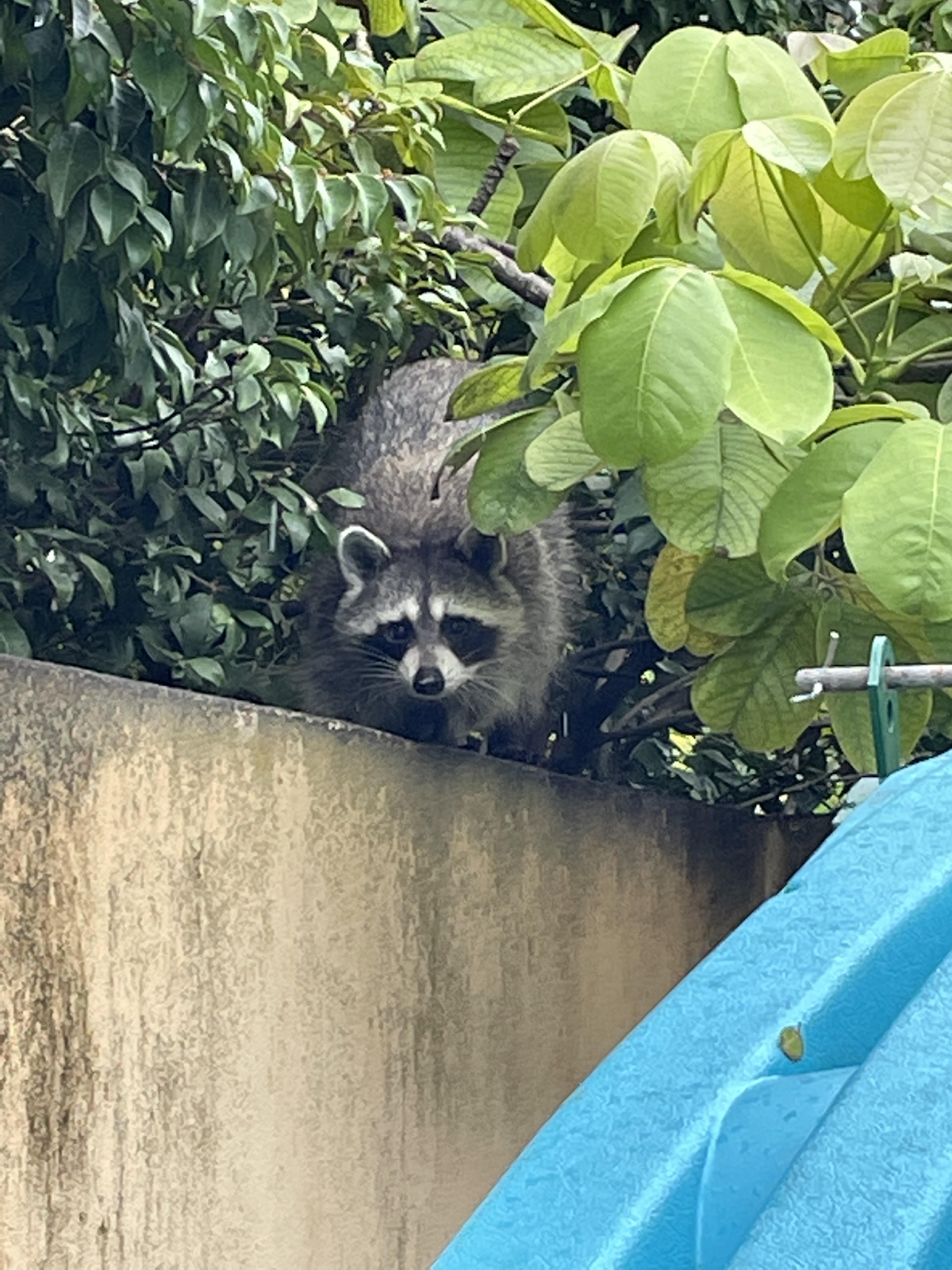
There are many myths about raccoons, but DID YOU KNOW…. that raccoons that are out during the day are not necessarily sick or dangerous? They may just be hungry and are often seen dipping their food in water? Although raccoons are clean animals (it’s true!), they are not actually washing their food but just manipulating it instead.

And vultures, those are some crazy critters! DID YOU KNOW…if they feel threatened, they will vomit up their food (remember that they mostly eat dead stuff) to scare other animals away? Wait, we were trying to convince you to LIKE scavengers…. so how about the fact that they cool themselves down by pooping on their legs? No, still gross? Just remember that fun fact the next time you think you are sweating too much ?

Interested in learning more fun facts about native Florida wildlife? Schedule a program for your group today! Email us at education@sawgrassnaturecenter.org.

A wild raccoon visits the dumpster at Sawgrass Nature Center…. And inspires this blog post!

Birds of the Everglades

We LOVE birds here at Sawgrass Nature Center which is why one of our Summer Jr. volunteers, Erin Willie, wanted to share this information with you:

Birds of the Everglades

Birds are spotted all over the world and play an important role in maintaining balance in the ecosystems they live in. The same goes for the Everglades and the home it gives to the birds that roam Florida. They help keep species of insects, crustaceans, mollusks, and fish from overpopulating our waterways.

Snail Kite

Snail kites have a very particular appetite. They feed almost exclusively on apple snails but have managed to start eating other non-native snails introduced to the Everglades. Their strong beaks allow them to break open the tough shells to get to the mollusk inside. They fly low over the water and use their acute eyesight to spot their prey and snatch them out of the shallows. It’s strict diet and the destruction of the Everglades has made the bird become an endangered species and protected under law. Its numbers are currently around 1,000 but have fluctuated greatly in the past from a low of 65 to a high of 3,000. Snail Kites are only native to Florida and the Everglades, making it very important to keep its species thriving.

Green Heron

Green Herons have tell-tale muddy green feathers, russet neck, and bright yellow legs and are  short and stocky compared to many other herons. Don’t be fooled by its small demeanor though! Their necks can extend to a larger length to assist in hunting and intimidating predators just like other herons. Special vertebrae located in their necks allow them to attack their prey with surprising force. Green Herons are an important predator in the Everglades, helping to keep invertebrates and fish at bay by preventing overpopulation.

Spoonbill

Just as the name implies, the beaks of these birds are flat and spoon-like in shape and are used to assist the animal in sifting through the mud and water for its next meal. Its goal is to find small fish, crustaceans, insects, and snails to eat. Some of these creatures, mainly the crustaceans, contain pigments called carotenoids that when eaten cause the feathers on spoonbills to turn vibrant pink. This means that chicks will remain brown and white until they eat enough to start changing color. 

Interested in seeing some of our native birds up close including a Green Heron named Goblin?

Come visit us during our normal business hours

Tuesday – Friday 9-5

Saturday – Sunday 10-3

We hope to see you soon!

Animal Feature of the Week

Wally the Alligator! Wally is one of the animals that has been at the Sawgrass Nature Center the longest. Rescued as a baby from the streets of Coral Springs, Wally had lost all fear of humans. While this does not necessarily mean she is friendly, it does mean that she cannot be released back into the wild. 

Like most animals that become too used to humans, Wally is used to people feeding her. Not only would she be unable to fend for herself in the wild, but she would also have zero urge to hide from potentially dangerous human encounters. 

Humans are the number one cause of death for most animals in the Animal Kingdom. This is why it is for the best that we leave them alone and they know to run from us. 

Want an up-close look?

Contact the SNC’s education department about how to book an educational program for you and your family at education@sawgrassnaturecenter.org

Preparing for Fall

As Summer comes to a close and the flies are hopefully dwindling in numbers, we are all getting excited about the shift in season here at the Nature Center. Fall brings with it cooler temperatures, the start of the new school year, and a new season of events in Coral Springs. 

Here at the SNC, we are preparing for birdwatching as migratory birds begin the flight down from the North to warmer climates for the winter. 

What are some animals we can see in the Fall? 

“Rose-breasted Grosbeak, Swainson’s Thrush, Bay-breasted Warbler, Yellow-billed Cuckoo, Black-throated Green Warbler, and many others” will make the journey to South Florida this Fall (https://www.10000birds.com/best-time-to-bird-south-florida-fall-migration.htm). 

Sea turtle nesting season will come to a close in October, meaning soon we will have little baby sea turtles making the journey from nest to open ocean on Florida beaches. 

Cedar waxwings will also come down to Florida for the warmer weather in the Winter. 

As temperatures slowly get to the infamous “Florida cold,” we will also see more reptiles journeying from deep sheltered waters to bask in the sun for warmth. The native American alligator, the invasive green iguana, and plenty of snakes will make themselves at home on our hot roads and sidewalks. 

What does Fall look like at the nature center? 

We will be as busy as ever with babies! Even though Spring has ended, there are animals that have babies year-round, meaning there are animals that need shelter and rescue year-round. We will be shifting away from baby birds and more towards baby mammals and reptiles. 

Our education department will be gearing up for camps for Thanksgiving and Winter Break. This means all new curriculum, animal encounters, and more for the new season of Camp Wild!

Want to participate in the SNC’s Fall?

Contact our education department at education@sawgrassnaturecenter.org to learn about private programming, camp, and other educational activities at the SNC! 

What is a keystone species?

A keystone species is an animal that is responsible for creating an ecosystem for many other animals. Great examples of this in Florida include the American Alligator and the Gopher Tortoise. But how do they do this?

American Alligators

American Alligators have an excellent sense of smell. In the hot Florida Summers, gators use their sense of smell to sniff out water underground. They then create what is referred to as a “gator hole.” These gator holes are used for alligator nests, but they also become a home for fish, amphibians, birds, and other reptiles. 

Gopher Tortoises

Gopher tortoises are an endangered species that is native to Florida. They are just as vital to our natural Florida ecosystems as the American Alligators because they also have an important role to play in establishing ecosystems. Gopher tortoises are burrowers and they dig very extensive underground burrows as a home for themselves. This shelter also becomes a home for snakes, bugs, bunnies, and plenty of other important Florida wildlife. 

Want to learn more?

Come visit the Sawgrass Nature Center in Coral Springs, Florida to get an up-close look at our alligator and gopher tortoise exhibits. These incredible animals are vital to our environment and need our protection. 

Want to get an up-close look?

Contact our education department at education@sawgrassnaturecenter.org to learn more about tours, private programs, and other educational opportunities at the Sawgrass Nature Center!