
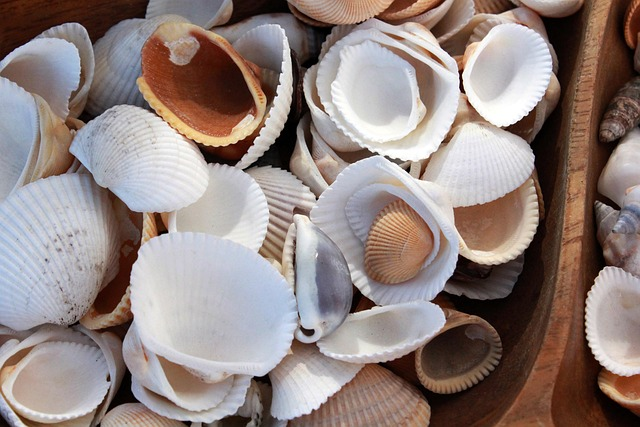
Every summer, beaches across Florida are crowded with vacationers cooling off from the hot summer temperatures. A time-honored pastime of beachgoers is collecting seashells. Seashells are made primarily of calcium carbonate, the same substance found in chalk, limestone, mortar, concrete, and some paints. Mollusks—soft-bodied marine animals like snails, clams, and octopuses—extract calcium carbonate from seawater and build their shells layer by layer, much like how trees form rings. This process creates the intricate spiral and fan-like patterns that make seashells both functional and beautiful.
Shell Shapes and Colors
Shells come in a wide variety of shapes and styles, such as:
- Conch shells – known for their large, spiral form.
- Scallop shells – fan-shaped with ridged lines.
- Cowries – smooth, glossy, and oval-shaped.
- Augers and Turrets – long and slender with tight spirals.
Their colors are influenced by:
- Pigments produced by the mollusk.
- Diet (e.g., algae or plankton).
- Environmental factors like water temperature and salinity.
- Shell structure and genetics.
Shell Collection and Safety
Only empty shells should be collected. Shells with living organisms are protected and cannot be sold or taken. Some species are also dangerous to handle:
- Conus textile – can sting multiple times with venom.
- Conus striatus oahuensis – has the longest stinging barb.
- Conus bandanus – another venomous cone snail.
Fun and Fascinating Facts
- Ancient currency: Cowrie shells were used as money in parts of Africa, Asia, and the Pacific Islands.
- Right-handed shells: Most seashells spiral to the right (dextral), though rare left-handed (sinistral) shells exist.
- Fossil records: Some seashells date back hundreds of millions of years, offering clues about Earth’s history.
- Unique DNA: Each mollusk species has its own genetic blueprint that determines shell shape, size, and color.
- Natural filters: Some mollusks, like oysters and mussels, help clean ocean water by filtering out pollutants.
- Shell reuse: Hermit crabs use discarded shells for protection, often switching as they grow.
- Cultural significance: Shells have been used in jewelry, tools, religious rituals, and art across many cultures.