Valentine’s Day isn’t just about roses and chocolates. Although these may work for humans, wildlife find countless other ways to impress their partners. In the natural world, it’s about hooting, dancing, decorating, and sometimes building an entire art installation just to impress someone. In different ecosystems around the world, and even right here in Florida, animals are putting on some of the most dramatic courtship performances you’ll ever see. Below, we dive into some of nature’s boldest romantics.
The Great Horned Owl doesn’t wait for spring. In Florida, these owls begin courtship in winter. Pairs call softly back and forth in deep, echoing duets, strengthening bonds that can last for years. If you’ve ever heard that haunting nighttime hoot, you might have been listening to a Valentine’s serenade.
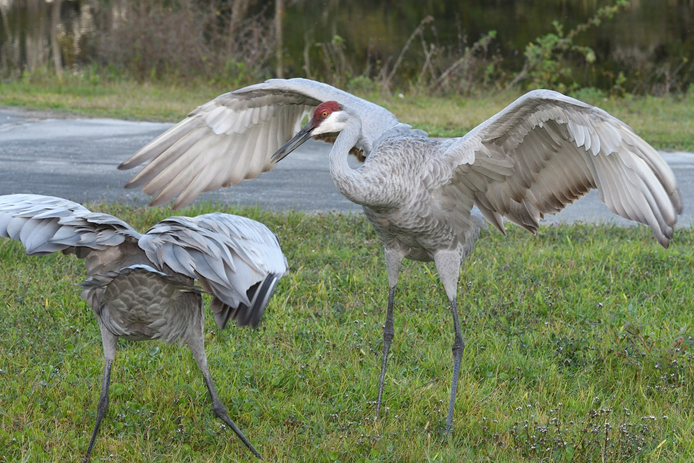
The Sandhill Crane, a familiar sight in Florida fields and wetlands, takes romance to the dance floor. They bow, leap high into the air, toss sticks, flap dramatically, and call loudly in synchronized displays. It looks joyful and a little chaotic, but it reinforces pair bonds and shows off strength and coordination.
The American Alligator prefers something a bit louder. During mating season, males and females release a deep bellow that vibrates the water’s surface. The low-frequency rumble can be felt as much as heard and is basically a swamp opera!
Outside Florida, there are many astounding rituals that may leave a human wondering but leave an animal blushing! Male Bowerbirds are a great example. However, they don’t just dance…they build. In Australia and New Guinea, males construct elaborate “bowers” out of sticks and decorate them with brightly colored objects like flowers, shells, berries, and even bits of colorful plastic. Some species even arrange items by size to create forced perspective, an optical illusion to impress females.
Birds-of-paradise are legendary for a reason. Males clear a stage area, groom every feather into place, and perform intricate dances that involve snapping, bouncing, wing-flicking, shape-shifting silhouettes, and hypnotic head movements. Some even transform into what looks like a floating black oval with neon highlights.
Although many do, not all avian courtship rituals involve dance or large displays. Male Adelie Penguins present females with carefully selected pebbles. If she accepts the stone, she may use it to help build their nest.
As funky as these rituals seem, they serve an important purpose. Courtship displays signal health, strength, creativity, and good genetics. The more impressive the performance, the more likely an animal is to pass on its traits. And when we see these behaviors happening, from Florida wetlands to tropical forests, it’s a sign that habitats are healthy enough to support new life. So, this Valentine’s Day, as we celebrate love in our own way, remember that nature has been celebrating Valentine’s Day long before we gave it a name, and honestly, it does it with a lot more flair.
Here are some videos to provide a visual of some of these unusual and mesmerizing rituals!